

When your production line goes down because a filter housing failed, the cost is felt almost immediately. Downtime, contaminated output, rework, and sometimes regulatory trouble. That is why choosing the right filter housing manufacturer in India matters far more than most procurement teams initially realize.
What is Filter Housing and Why Does It Matter?
A filter housing is the outer shell or vessel that holds a filter element, cartridge, or bag in place during a filtration process. Liquids or gases pass through the housing; contaminants are captured by the media inside, and clean fluid exits on the other side.
Without properly designed housing, even the best filter cartridge will underperform. Bypass leaks, pressure drops, and media collapse are all problems that trace back to poorly built housings. So the quality of the housing itself is just as important as the filter media inside it.
Filter housings are used in nearly every industrial sector you can think of: pharmaceuticals, chemicals, food processing, water treatment, oil and gas, textiles, and more.
Types of Filter Housings Manufactured in India
Different applications call for different housing configurations. Here is a quick overview of the main types available from Indian manufacturers today.
Cartridge Filter Housing
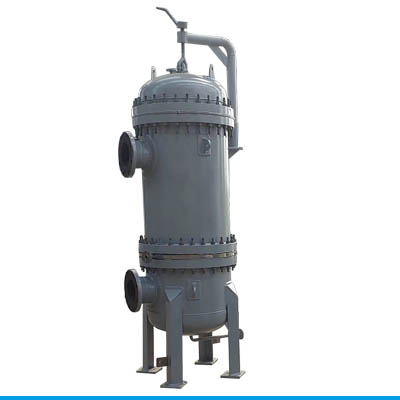
This is the most widely used type across industries. A cartridge filter housing holds one or more cylindrical filter elements. It is compact, easy to maintain, and works well across a range of flow rates and pressure requirements.
Bag Filter Housing
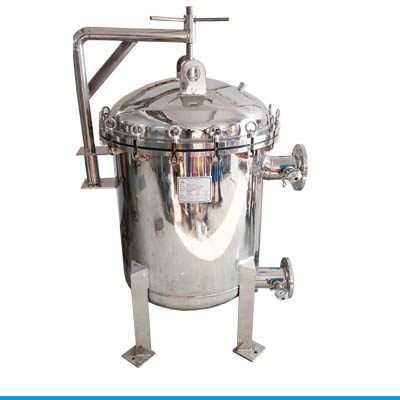
Bag filter housings use a fabric bag as the filter medium. They are well-suited for higher flow rates and applications where the solids load in the fluid is significant. Industries such as paint, ink, chemicals, and food processing rely heavily on these.
Basket Filter Housing
A basket strainer or basket filter housing uses a perforated metal basket to catch larger particulates. It is often used as a pre-filter before finer filtration stages.
PVC Filter Housing
PVC cartridge and bag filter housings are specifically designed for corrosive chemical applications. Stainless steel reacts poorly with many acids and other aggressive chemicals, so PVC housings are often the safer and more practical choice in such environments.
Vent Filters
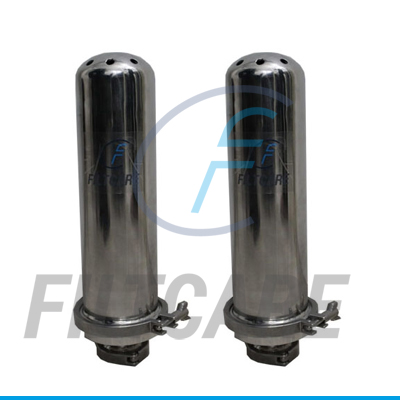
Vent filters are used on storage tanks, reactors, and processing vessels to prevent contamination from entering through vents. They are a critical component in pharmaceutical and chemical manufacturing, where sterile or clean environments must be maintained.
India’s Industrial Filtration Industry Is Growing Fast
There is a strong case for sourcing from Indian manufacturers, and the market data support it. According to a 2025 report by The Insight Partners, the Indian industrial filters market was valued at USD 1.29 billion in 2024 and is projected to reach USD 2.03 billion by 2031, registering a CAGR of 6.9% during 2025 to 2031.
Additionally, the broader India filtration systems market reached USD 3.60 billion in 2024 and is expected to grow to USD 7.08 billion by 2033 at a CAGR of 7.80%, according to IMARC Group.
This growth is being driven by stricter environmental regulations under the Central Pollution Control Board, government initiatives such as the National Clean Air Programme (NCAP), and an expanding manufacturing base across sectors, including pharmaceuticals, food and beverage, and chemicals.
In short, Indian manufacturers are being pushed to improve quality and capability at a genuinely impressive rate.
What Makes a Good Filter Housing Manufacturer in India?
Not every manufacturer is the same. Here are a few things to consider before you finalize a supplier.
Material Quality: Filter housings are typically made from stainless steel (SS 304 or SS 316L), carbon steel, or engineering plastics such as PVC and polypropylene. The material must match the chemical nature of the fluid being filtered, as well as the operating pressure and temperature. A manufacturer who understands this from the start and recommends the right material is worth far more than one who quotes what you ask for.
ISO Certification ISO 9001:2015 certification is a basic but meaningful indicator that a manufacturer follows documented quality systems. It does not guarantee perfection, but it does mean that processes are in place to catch and correct problems.
Range of Products: A manufacturer with a wide product range, from cartridge and bag housings to self-cleaning filter systems and specialty PVC housings, can serve as a single source for multiple filtration needs. This simplifies procurement and ensures design compatibility between components.
Custom Engineering Capability Standard housings do not always work. Unusual flow rates, non-standard connection sizes, exotic materials for aggressive media, or space constraints in a plant all require customized solutions. A manufacturer with in-house engineering support is the one you want when your application goes off the standard shelf.
After-Sales Support: Filtration systems need periodic maintenance. Replacement cartridges and seals need to be available. A manufacturer who supports you after the sale is doing business the right way.
Why Filtcare is Trusted as a Filter Housing Manufacturer in India
Filtcare Technology Pvt. Ltd. has been engaged in the design, engineering, manufacturing, and supply of industrial filtration systems since 2016. Based in India, Filtcare serves customers across Maharashtra, Gujarat, Rajasthan, Karnataka, Andhra Pradesh, Telangana, Uttar Pradesh, and other major industrial states, as well as export markets in the Middle East, Southeast Asia, and Africa.
Filtcare holds ISO 9001:2015 certification and manufactures a full range of filter housing types: cartridge, bag, and basket filter housings; PVC cartridge and bag filter housings; and vent filters. Self-cleaning filter systems are also part of the product portfolio.
What sets Filtcare apart is the combination of product breadth and application knowledge. The team does not simply ship hardware. Considerable effort is put into understanding the client’s process, recommending the right product, and supporting the customer beyond the point of sale. Industries served include pharmaceuticals, chemicals, textiles, water treatment, oil and gas, dairy and food, and petrochemicals.
Industries That Rely on Quality Filter Housing Solutions
It is worth understanding how filter housings are used across different sectors, because the requirements vary significantly.
In the pharmaceutical industry, sterility and contamination control are non-negotiable. Filter housings used in pharma must meet stringent hygienic design standards, be cleanable in place, and often require validation. Materials must not react with or contaminate the product being filtered.
Chemical Industry Chemical processes involve fluids that can be highly corrosive, abrasive, or reactive. PVC and polypropylene housings are often specified here. Pressure ratings also tend to be higher, and the housing design must handle that safely.
Water Treatment Municipal and industrial water treatment facilities use filter housings at multiple stages of the treatment process. Pre-filtration, post-filtration, and polishing stages all have different requirements, and the housing configuration needs to match each stage.

Food and Beverage and Dairy Sanitary design, easy cleaning, and material compliance with food safety standards are the main requirements here. Stainless steel housings with smooth internal finishes are typically specified.
Textiles Process water quality directly affects dye uptake and final product consistency in textile manufacturing. Filtration keeps process water within the required quality parameters, protecting both product quality and machinery.
Frequently Asked Questions
What is the difference between a cartridge filter housing and a bag filter housing?
A cartridge filter housing holds cylindrical filter elements and is suited for fine filtration across low to medium flow rates. A bag filter housing uses a fabric bag and is better for higher flow rates and applications with a heavier solids load. The choice depends on the application’s flow requirements and the size of particles being removed.
What materials are filter housings made from?
The most common materials are stainless steel (SS 304 or SS 316L), coated mild steel, polypropylene, and PVC. The right material depends on the fluid being filtered, the operating temperature, the pressure, and the required chemical compatibility.
How do I know what filter housing size I need?
The key parameters are flow rate, operating pressure, fluid type, required filtration rating (in microns), and available space. A good manufacturer will help you size the housing correctly based on these inputs.
What does ISO 9001:2015 certification mean for a filter housing manufacturer?
It means the manufacturer follows a documented quality management system that covers design, production, testing, and delivery. It is an internationally recognized standard that gives buyers some assurance of consistent quality.
Can filter housings be customized?
Yes. Most reputable manufacturers in India offer custom engineering for non-standard sizes, materials, connections, and configurations. If your application has unusual requirements, always ask your manufacturer whether customization is possible before settling for a compromise.
How long does a filter housing typically last?
With correct material selection, regular maintenance, and proper operation within rated pressure and temperature limits, a stainless steel filter housing can last many years. PVC housings may have a shorter service life in demanding conditions. The filter media inside the housing, of course, needs to be replaced more frequently.
Is it better to source filter housings domestically or import them?
For most Indian industries, domestic sourcing makes more practical sense today. Lead times are shorter, after-sales support is more accessible, prices are more competitive, and there is no import duty overhead. Indian manufacturers have also significantly improved their quality and engineering capability over the past decade.


